
Grove Tree Care · Tree Care Blog · Portland South Metro
What to Expect on Tree Removal Day, Step by Step
Knowing what to expect on tree removal day takes most of the stress out of it. The photos in this post come from a Grove crew job on a multi-stem maple on a residential street, so you can see each stage the way it really looks, not the way a stock photo shows it. Here is the order a professional crew works in, what you can do ahead of time, and the questions worth asking before anyone starts a saw.
The Short Answer: A Plan, a Drop Zone and a Crew That Works in Order
A well run removal follows the same sequence every time: set up and secure the work area, climb, rig, cut, chip, clean up. Nothing gets cut until the area under the tree is controlled. If your crew skips that step, that is a warning sign.
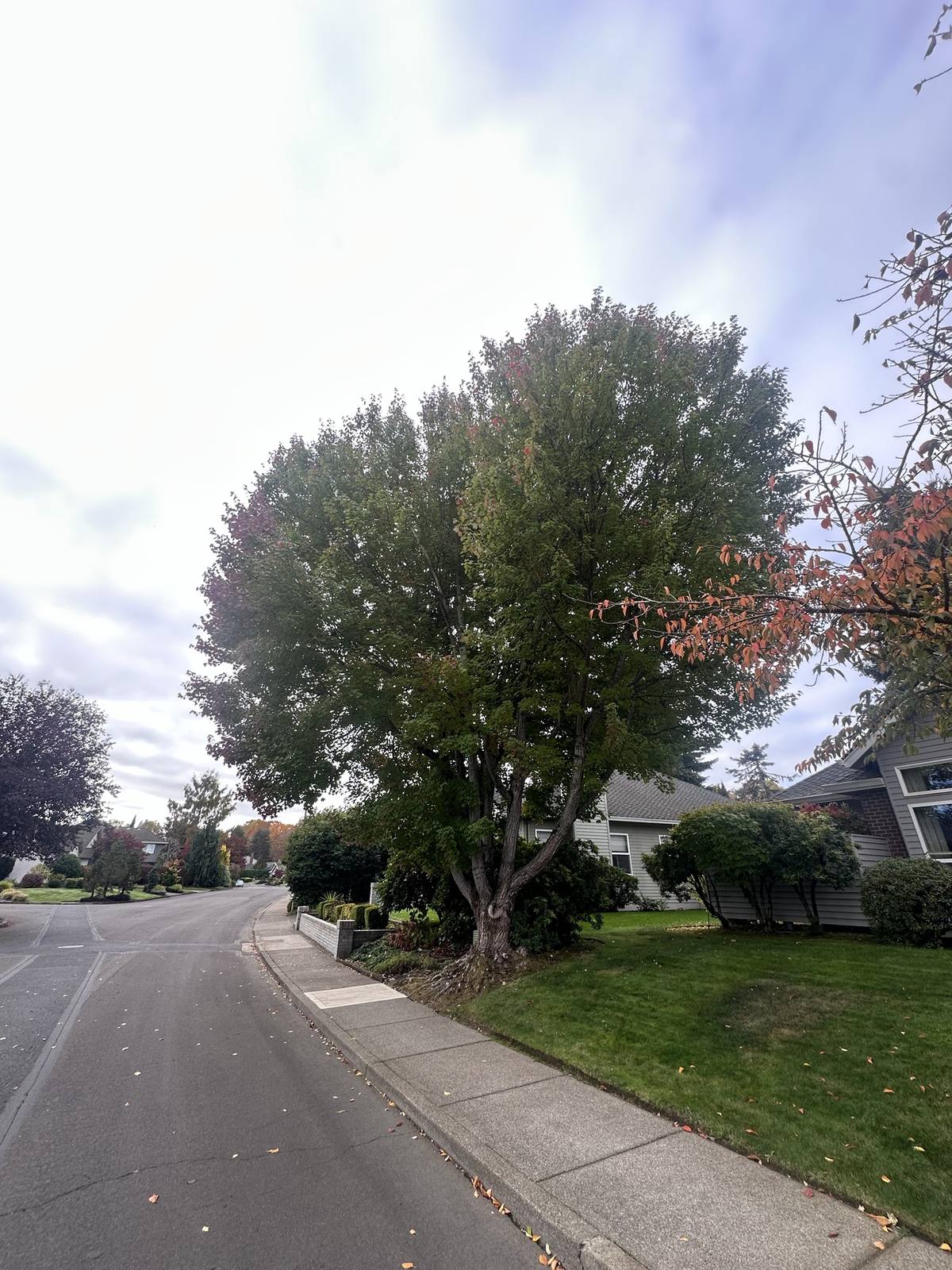
The tree in these photos is a large multi-stem maple standing close to a house, a sidewalk and landscaping. That is exactly the kind of site where the order of work matters, because a large piece cannot simply be dropped.
Before the Crew Arrives: What You Can Do
A few minutes of preparation makes the day faster and safer for everyone:
- Move vehicles out of the driveway and off the street near the tree.
- Clear patio furniture, planters, toys and garden decor from under and around the canopy.
- Unlock gates the crew needs to reach the yard.
- Keep kids and pets indoors while work is under way.
- Confirm any city permit is in place. Many south metro cities regulate certain trees, and our city by city tree removal permit guide explains what to check.
Step 1: Setup and Safety
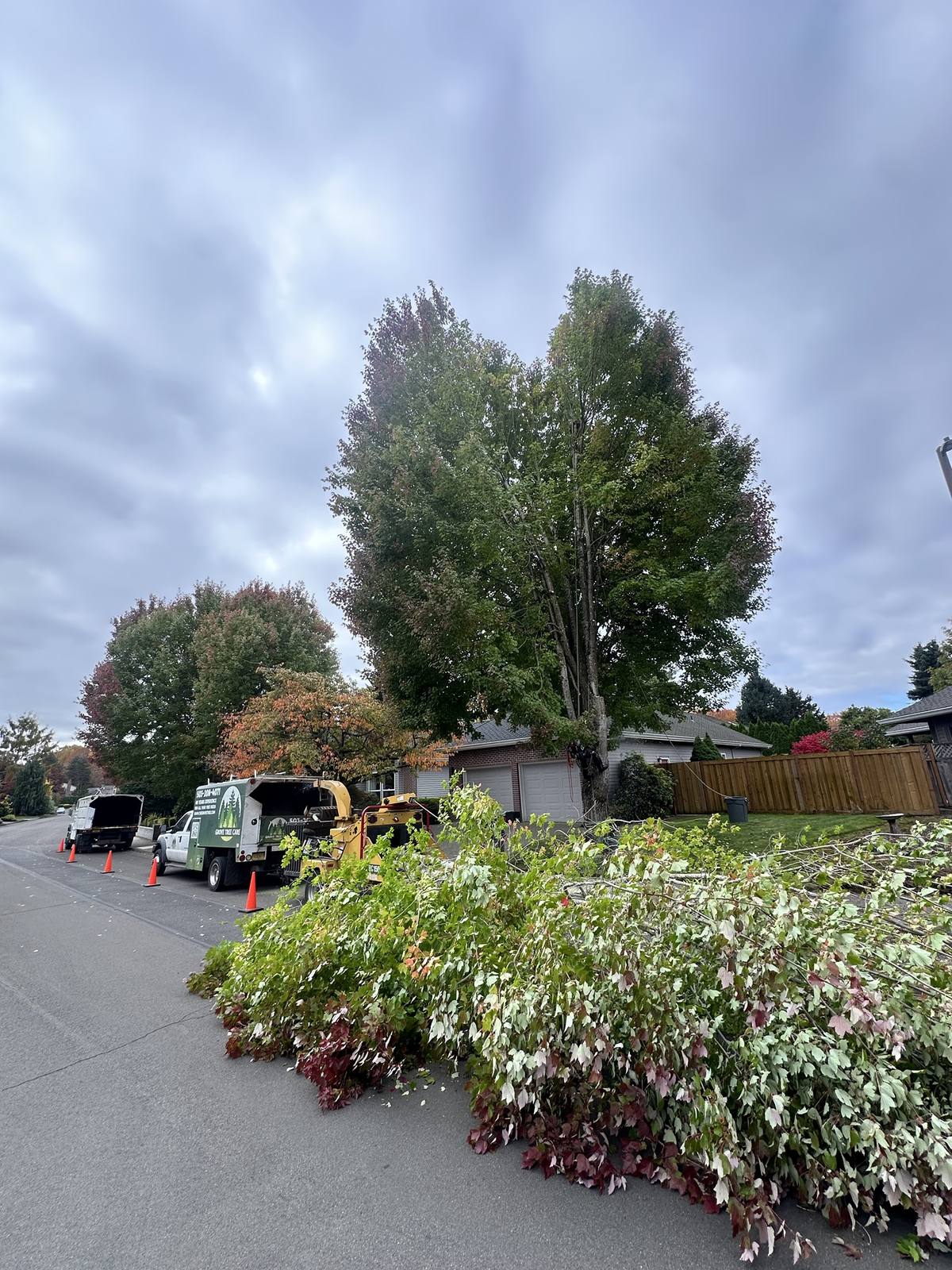
The first thing you will see is not a chainsaw. It is traffic cones, the chip truck and the chipper going into position. The crew marks the work zone, decides where pieces will land and keeps people and vehicles out of it. In the photo below, cones line the curb and the chipper is staged next to the truck before any cutting starts.
Step 2: The Climber Goes Up
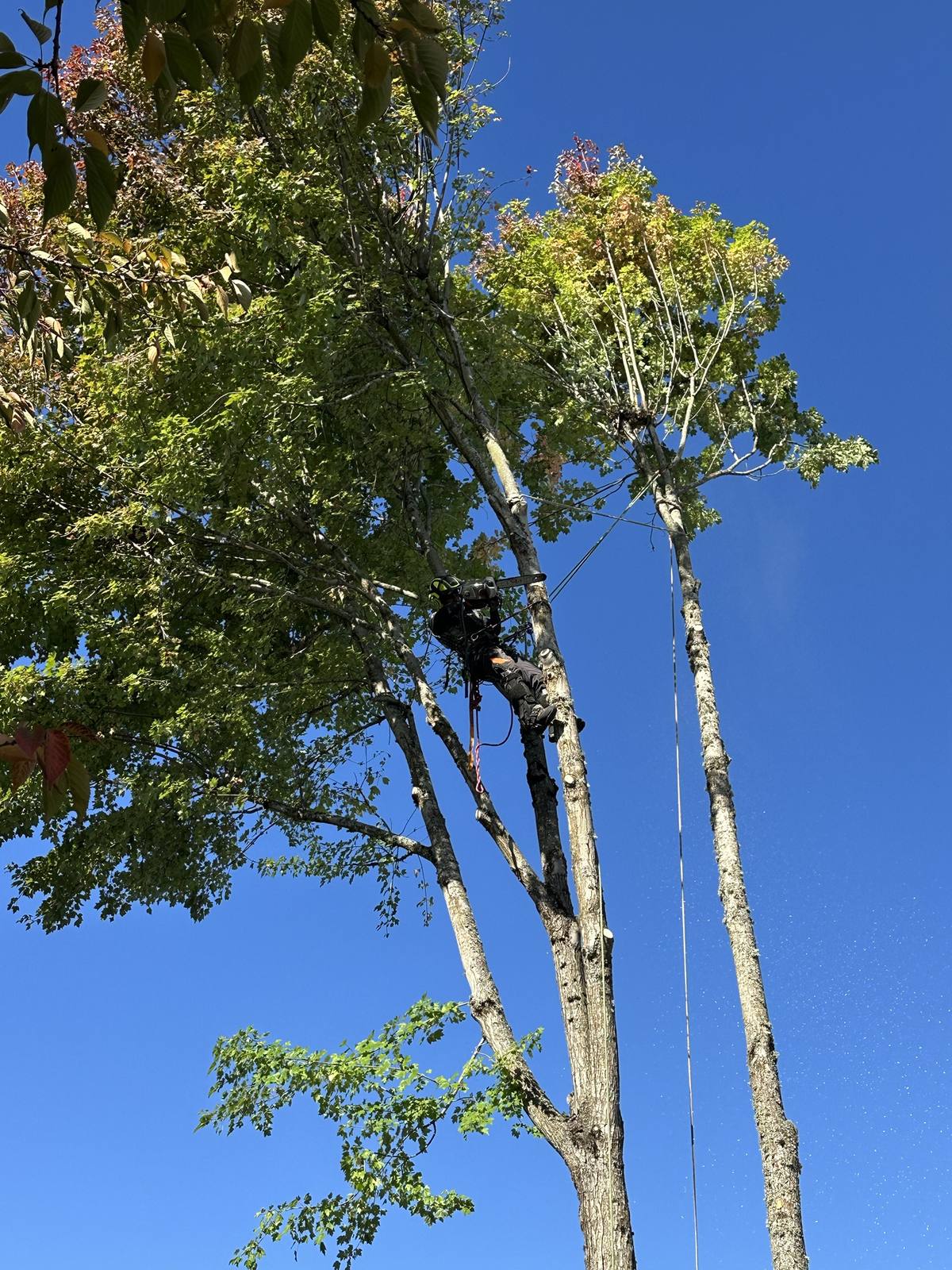
For a tree like this, a climber works from inside the canopy using a rope and saddle, with a helmet and a saw on a lanyard. The climber works from the top down, taking the highest and lightest pieces first and removing the stems one at a time. A multi-stem tree has several trunks of different sizes, so the plan for each stem is different.
Step 3: Rigging Lines Control Every Piece
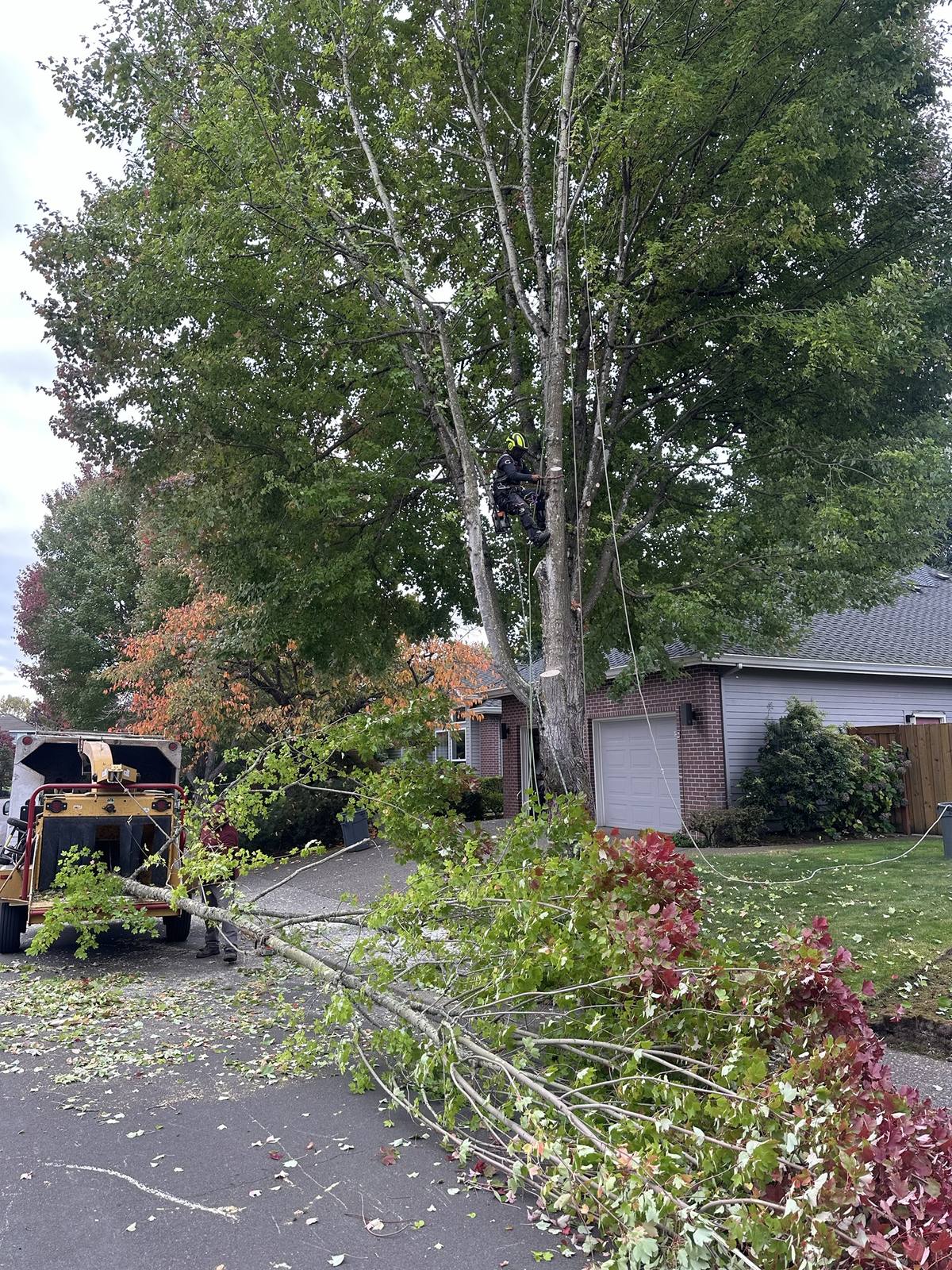
Rigging is what separates a careful removal from a risky one. Ropes run from the tree to anchor points so the crew can lower pieces under control instead of letting them fall onto a roof, fence, lawn or sidewalk. In the photo below, you can see lines running down from the canopy while the ground crew handles the limbs that have already come down.
Step 4: Limbs Go Through the Chipper
While the climber keeps working, the ground crew drags limbs to the chipper and feeds them in. This is the loud part of the day. It also keeps the work area clear, so the next piece has somewhere safe to land.
Step 5: The Trunk Comes Down in Sections
Once the canopy is gone, the crew takes the remaining stems down in sections. Larger pieces are lowered with rigging or rolled to a safe spot. The size of the wood decides whether it goes through the chipper or is cut into rounds.
Step 6: Cleanup, Wood and Stump
Cleanup, firewood rounds and stump grinding are not the same in every quote, so ask your estimator exactly what is included. A good quote spells out whether chips are hauled or left, what happens to the wood, and whether the stump is ground or left at ground level. If you want the stump removed, ask for it in the same visit.
What Changes the Time and the Price
Tree size, the number of stems, access for the truck and chipper, and what is under the tree all change how long a removal takes and what it costs. A tree with room to move pieces is simpler than one over a roof and a fence. For pricing context, read our tree removal cost guide for the Portland metro.
Questions to Ask Before Removal Day
The best way to know what to expect on tree removal day is to ask these questions at the estimate, not after the truck shows up:
- Is the company licensed in Oregon, and can I verify the license number?
- Is an ISA certified arborist involved in the plan?
- Who is on the crew, and are they employees of the company?
- What does the quote include for cleanup, wood and the stump?
- Who handles the permit if one is needed?
The University of Minnesota Extension has a useful independent guide on how to hire a tree care professional. Our own checklist is in how to choose a tree service company in the Portland south metro.
Schedule a Free Tree Removal Estimate
Want a clear picture of what to expect on tree removal day for your own tree? Our arborists will walk the property with you, explain the plan and give you an honest quote.
- ISA Certified Arborists on every assessment
- Oregon LCB License #100543
- Free on-site evaluations, no obligation
- Honest answer, including when no action is needed
- South metro based in Aurora, OR
Written by the team at Grove Tree Care. ISA-certified arborists serving West Linn, Tualatin, Wilsonville, Oregon City, Sherwood, Lake Oswego, Beaverton and the Portland south metro from our Aurora, OR shop.