
Portland South Metro · ISA Certified · LCB# 100543
Tree Health Assessment in Portland Oregon
A tree health assessment in Portland, Oregon is the most important step you can take before making any decision about a tree on your property — whether it’s showing signs of stress, declining after a dry summer, or needs documentation for a permit application. Grove Tree Care’s ISA-certified arborists evaluate your tree’s condition thoroughly and give you an honest answer about what’s happening and what your options are. Not a sales pitch. A diagnosis.
- ISA Certified Arborists on Every Assessment
- Oregon LCB License #100543
- Honest Recommendations — No Upsells
- Written Arborist Reports Available
- Free On-Site Assessments
- 24/7 Emergency Response
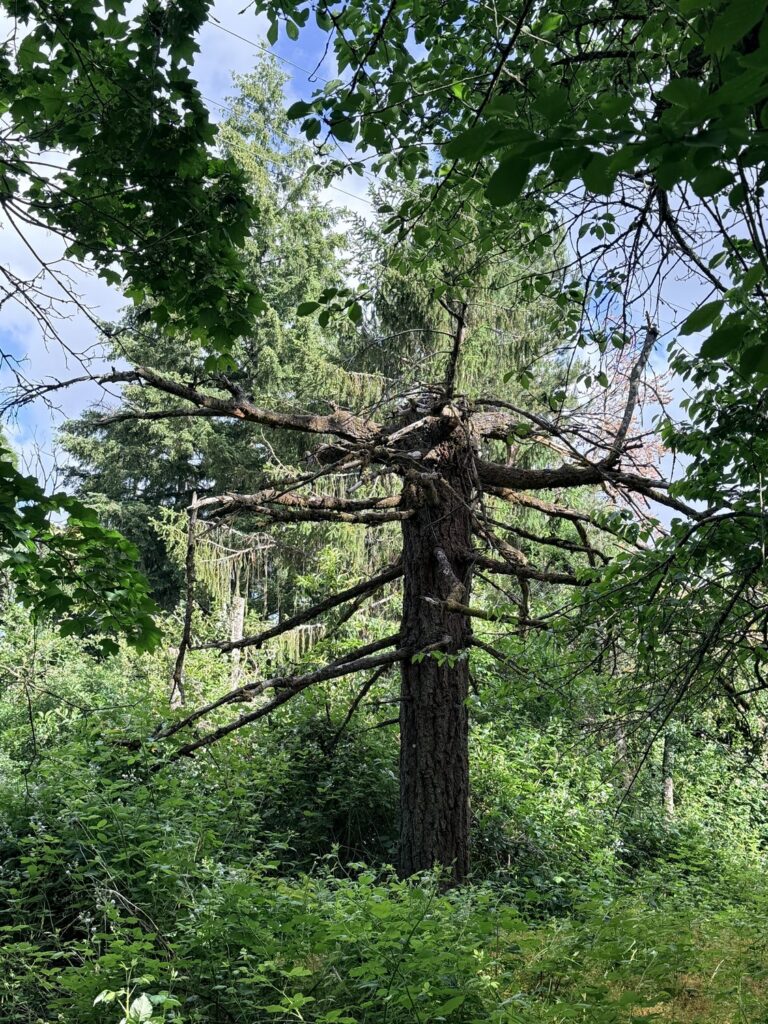
What Is a Tree Health Assessment in Portland Oregon?
A tree health assessment is a systematic, science-based evaluation of your tree’s overall condition conducted by an ISA-certified arborist. Unlike a free removal estimate — which focuses on access, crew size, and scope — a health assessment focuses on what’s actually happening with the tree biologically and structurally. The goal is to understand the problem accurately and give you the full range of options, including whether doing nothing is the right call.
Grove Tree Care’s ISA-certified arborists evaluate several key factors during every assessment: canopy condition, bark and trunk health, branch structure, root zone, and environmental factors specific to your property. We look at the whole picture — not just the symptom that prompted the call.
Following the evaluation you receive a clear summary of findings and specific recommendations. For situations requiring formal documentation — permit applications, property transactions, HOA disputes, or legal matters — we prepare a written ISA arborist report that addresses the specific criteria required.
What Our ISA Arborists Evaluate During a Tree Health Assessment
Our assessments follow ISA standards and cover every dimension of tree health. Here’s what our arborists examine on every visit:
Canopy Condition
Leaf color, density, premature drop, dieback in the upper crown, and signs of stress or disease in the foliage. Early leaf drop in August, sparse canopy, or yellowing mid-season are all meaningful signals.
Bark and Trunk
Cracks, splits, cankers, fungal growth, areas of missing or peeling bark, signs of pest infestation (exit holes, frass, galleries under the bark), and wet or discolored patches indicating bacterial infection. We’re also watching closely for emerging threats like emerald ash borer, now confirmed in our service area’s quarantine zone.
Branch Structure
Co-dominant stems, overextended limbs, weakly attached branch unions, previous topping or poor pruning cuts, and dead or hanging branches. Structural problems are among the most common — and most addressable — issues we find.
Root Zone
Soil compaction, grade changes, root damage from construction or utility work, surface roots showing distress, fungal growth at the base, and signs of Armillaria or other root rot pathogens. Root zone issues are often the last thing homeowners think about and the first thing our arborists check.
Environmental Factors
Site conditions, drainage, proximity to structures or utilities, recent construction impact, and soil conditions. The same species can behave very differently on a West Linn hillside vs. a Tualatin flat lot — site context matters.
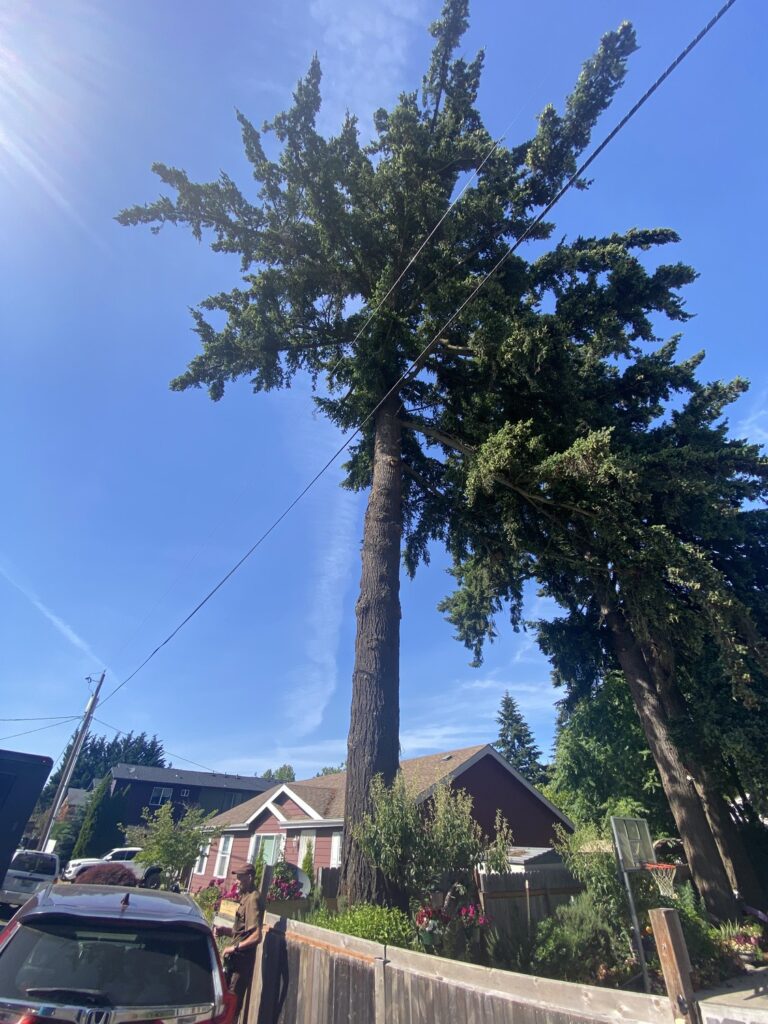
When to Schedule a Tree Health Assessment in Portland Oregon
Most homeowners call us when something is obviously wrong. But the highest-value assessments are the ones that catch problems before they become emergencies. Here’s when to schedule one:
You Should Schedule an Assessment When:
- A tree looks sick, stressed, or declining and you don't know why
- A tree failed to leaf out in spring or is dropping leaves unusually early
- You've noticed mushrooms, fungal growth, or soft wood at the base
- A tree has developed a new lean or you've noticed soil heaving
- A tree sustained storm damage and you're not sure if it's structurally sound
- You're buying or selling a property with significant trees
- Your city requires an ISA arborist report for a permit application
- You're planning construction near trees and need a pre-construction assessment
- A tree has a history of topping or poor pruning and you're concerned about structure
- An HOA or neighbor dispute involves the condition or value of a tree
When a Free Estimate Is Enough:
- You already know the tree needs to come down and just need a removal quote
- The issue is clearly cosmetic — a branch you want removed for aesthetics
- The tree is visibly dead — a simple estimate covers what you need
Honest advice is part of every interaction with Grove Tree Care. If you call us and your situation doesn’t warrant a formal assessment, we’ll tell you that.
When Portland South Metro Cities Require an ISA Arborist Report
Several cities in our service area require a formal ISA arborist report as part of the permit process — making a professional tree health assessment not just useful but legally necessary:
Lake Oswego: Type II permit applications for elective removal of native trees typically require an ISA arborist report addressing the tree’s condition and removal criteria.
Sherwood: Street trees over 10″ DBH require an ISA arborist report before a permit is issued — describing the tree’s condition and specific removal rationale.
West Linn: Heritage tree removal applications and complex removal situations may require formal arborist documentation.
Wilsonville: Type B permit applications in the SROZ may require arborist documentation depending on the tree and location.
Oregon City: Hazardous tree applications are significantly strengthened by an ISA arborist report, and properties in the Geological Hazard Overlay District may require documentation for slope-adjacent removals.
Our ISA-certified arborists prepare reports specifically structured to address each city’s permit criteria. For a complete city-by-city permit guide, read our tree removal permit guide for the Portland south metro.
What's Included in a Written ISA Arborist Report
When a formal written report is required for a permit, property transaction, or legal matter, our reports typically include:
- Tree species, location, and dimensions (DBH, height, canopy spread)
- Overall health rating and condition assessment
- Identified defects, disease, or structural issues
- Risk evaluation — likelihood and consequence of failure
- Specific findings addressing permit criteria or the question at hand
- Recommended management actions with timeline and priority
- ISA certification number and arborist signature
Our written arborist reports are accepted by planning departments across the Portland south metro including West Linn, Tualatin, Wilsonville, Lake Oswego, Sherwood, Beaverton, and Oregon City.
All arborist certifications follow ISA standards and ANSI A300 guidelines — the industry benchmark for professional arboriculture.
Why Choose Grove Tree Care for Your Tree Health Assessment
ISA-Certified Arborists —
On Your Assessment, Not Just in the Office Our certified arborists conduct every assessment personally. You get science-based expertise and honest recommendations from the same person who will oversee any recommended work.
Why Choose Grove Tree Care for Your Tree Health Assessment in Portland Oregon
Including “Do Nothing” We tell you when a tree doesn’t need treatment, removal, or cabling. If the answer is “monitor it and call us in six months,” that’s what we’ll say. We don’t generate work that isn’t needed.
Written Reports Accepted by All South Metro Planning Departments
Our ISA arborist reports are prepared to address the specific criteria of West Linn, Lake Oswego, Sherwood, Wilsonville, Oregon City, and other south metro cities. They’re not generic templates — they’re built for the specific permit or question at hand.
Free On-Site Assessments —
No Obligation Our baseline assessments are free. You get an honest evaluation of what we observe and a clear summary of your options. A formal written report is a separate service when required for a permit or legal matter.
Aurora-Based — Fast Response Across the South Metro
Our shop in Aurora puts us 15-25 minutes from every city in our service area. We’re not dispatching from across the metro. We’re local, accountable, and available when it matters.
Tree Health Assessments Across the Portland South Metro
We conduct tree health assessments across the entire Portland south metro — from the steep hillside properties of West Linn and Lake Oswego to the established neighborhoods of Oregon City and the newer developments in Wilsonville and Tualatin.
Tree Health Assessment — Frequently Asked Questions
A: Grove Tree Care provides free on-site assessments — an ISA-certified arborist visits your property, evaluates the tree, and gives you honest findings and options at no charge. A formal written ISA arborist report, when required for a permit application, property transaction, or legal matter, is a separate service. Contact us for pricing on written reports for your specific situation.
A: A free estimate focuses on scope, access, and pricing for a specific job — usually removal or pruning. A tree health assessment focuses on diagnosing what’s actually happening with your tree biologically and structurally, and giving you the full range of options. We provide both. If you’re not sure which you need, call us — we’ll ask a few questions and advise you.
A: It depends on your city and your situation. Lake Oswego, Sherwood (trees over 10″ DBH), West Linn heritage trees, and some Wilsonville and Oregon City situations require ISA arborist reports. Our arborists identify what’s required for your specific city and tree before any work begins. Read our tree removal permit guide for the Portland south metro for a city-by-city breakdown.
A: Common warning signs include dead branches in the upper crown, fungal growth at the base, cracks or splits in the trunk, a new lean, early leaf drop, yellowing foliage mid-season, or sawdust-like material near the base indicating pest activity. For a complete guide to warning signs, read our post on signs your tree is dying or hazardous in the Portland south metro.
A: Yes — frequently. Some trees that appear to be in serious decline can be saved with treatment, pruning, or cabling when caught early enough. Our assessments identify whether intervention is viable and what form it should take. We recommend removal only when it’s genuinely the right answer — not because it’s a larger job.
A: Most residential assessments take 20-45 minutes depending on the number of trees and complexity of the situation. A formal written arborist report takes additional time to prepare after the site visit — typically 2-5 business days depending on scope.
A: Our arborists hold ISA (International Society of Arboriculture) certification — the industry’s most recognized professional credential for tree care. Grove Tree Care also holds Oregon LCB License #100543 and carries full general liability insurance and workers’ compensation. We follow ISA standards and ANSI A300 guidelines on every assessment and job.
Schedule Your Free Tree Health Assessment Today
Grove Tree Care’s tree health assessment in Portland Oregon includes free on-site evaluations, written arborist reports, and honest recommendations across the south metro.
Licensed · ISA Certified · LCB# 100543 · Free Assessments · Written Reports Available info@thegrovetree.com · thegrovetree.com · Aurora, OR