
Tree Trimming and Pruning Services | Grove Tree Care
Serving Beaverton, Tigard, Lake Oswego, West Linn, Tualatin, Wilsonville, Sherwood, Oregon City, Canby, Newberg, and surrounding communities
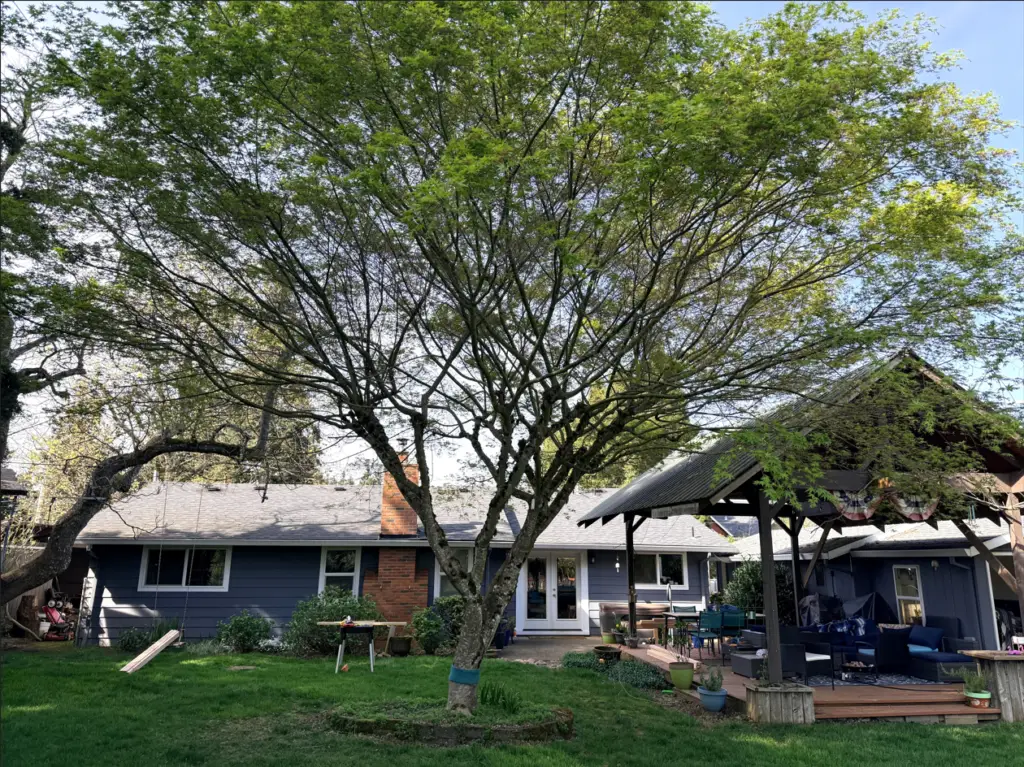
Expert Tree Trimming and Pruning Across the Portland South Metro
A well-pruned tree is healthier, safer, and better looking. A poorly pruned tree — one that’s been topped, stripped, or cut without understanding its structure — can be permanently damaged, structurally compromised, and a liability on your property for decades.
Grove Tree Care’s lead arborist, Kevin Fox, has been pruning trees across the Portland metro and Willamette Valley for over 40 years. Our ISA Certified Arborists follow ANSI A300 pruning standards on every job, which means every cut we make has a purpose — whether that’s improving structure, removing a hazard, letting in light, or extending the life of a tree that’s been neglected for years.
If you’re in Beaverton, Tigard, Lake Oswego, West Linn, Tualatin, Wilsonville, Sherwood, Oregon City, Canby, or Newberg, call 503-208-4071 or request a free estimate.
Why Proper Pruning Matters
Pruning is not just about making a tree look tidy. Done correctly and at the right time, it’s one of the most valuable things you can do for a tree’s long-term health and your property’s safety. Done incorrectly, it can introduce disease, create structural weakness, and accelerate decline.
Here’s what expert pruning actually does:
Removes hazards before they become emergencies. Dead, dying, and structurally weak branches are the ones that come down in windstorms — on your roof, your fence, your car, or your neighbor’s property. Proactive pruning removes these risks on your schedule, not after a storm.
Improves long-term tree structure. Trees that are pruned correctly when young develop strong architecture that lasts for generations. Older trees that have never been pruned often have multiple structural defects that can be corrected or mitigated with proper work.
Promotes health. Removing dead and diseased wood stops the spread of decay. Thinning the canopy improves air circulation, which reduces fungal disease pressure — a real concern in the wet Pacific Northwest climate.
Extends tree life. A tree that receives regular, appropriate pruning lives longer and performs better than one that’s ignored until it becomes a problem.
Protects your property. Branches overhanging your roof, rubbing against your siding, or growing toward power lines create ongoing damage that’s easy to prevent and expensive to repair after the fact
Our Pruning Services
Crown Cleaning
The foundation of most pruning jobs. We remove dead, dying, diseased, and broken branches throughout the canopy — improving appearance, reducing decay entry points, and eliminating the most common sources of storm damage. This is appropriate for nearly any tree at nearly any time of year.
Crown Thinning
Selective removal of branches to reduce canopy density, improve light penetration, and increase air movement through the crown. Particularly valuable for trees that have become overly dense over time, or for improving light to lawns and gardens below. Thinning is done carefully — no more than 25% of live crown removed in a single visit.
Crown Raising
Removing lower branches to provide clearance over lawns, driveways, sidewalks, structures, and sight lines. Common in Beaverton and Tigard neighborhoods where street trees and yard trees have grown to interfere with traffic, walkways, or outdoor living areas.
Crown Reduction
Reducing the overall size of a tree’s canopy while maintaining its natural shape. Used when a tree has outgrown its space, is encroaching on a structure, or needs to be kept smaller for utility clearance. Done correctly, crown reduction is distinct from topping — we make cuts back to lateral branches, not stubs.
Structural Pruning
For younger trees or trees with significant defects, structural pruning corrects problems early — removing co-dominant leaders, eliminating crossing branches, and establishing a strong central framework before issues become serious. This is the highest-value pruning investment you can make in a tree.
Deadwooding
Targeted removal of all dead branches from the canopy. Essential for trees near structures, play areas, and high-traffic areas. Oregon’s wet winters accelerate decay, and deadwood in a mature Douglas fir, oak, or big-leaf maple is a genuine hazard.
Vista Pruning
Selective thinning and removal to open or improve a view — lake views in Lake Oswego, valley views in West Linn and Oregon City, hillside views in Newberg. Done carefully to preserve the tree while achieving the homeowner’s visual goals.
Fruit Tree Pruning
The Willamette Valley is fruit tree country — apples, pears, cherries, plums, and walnuts are common throughout Canby, Aurora, Newberg, and Dundee. Fruit trees require annual pruning for productive crops and long-term health. We prune to open the canopy, remove water sprouts, and maintain manageable height for harvesting.
Ornamental and Hedge Trimming
For formal hedges, ornamental trees, and landscape shrubs that need shaping and maintenance. Common in established neighborhoods throughout Tigard (97223, 97224), Lake Oswego (97034, 97035), and Sherwood (97140).
Pruning Timing in the Pacific Northwest
Timing matters — and what works in a national gardening guide doesn’t always apply to trees in Beaverton or Canby.
Late winter (February – early March) is the best window for most deciduous trees — maples, alders, birch, and ash. Trees are dormant, wounds heal quickly when growth resumes, and with leaves off, we can fully assess structure.
Spring (April – May) is appropriate for light shaping of established evergreen hedges after new growth has hardened off.
Summer is used for minor deadwood removal and fruit tree work (cherries and stone fruits are best pruned in August when disease pressure is lower).
Oaks should never be pruned between April and July in Oregon. The beetles that spread oak wilt are active during this window, and fresh wounds attract them directly. We schedule all oak pruning for August through January.
Elms follow similar rules — avoid April through August to reduce Dutch elm disease risk.
Year-round, dead and hazardous branches can and should be removed regardless of season. Safety doesn’t wait for the ideal pruning window.
What Sets Grove Tree Care’s Pruning Apart
We follow ANSI A300 standards. These are the industry’s established pruning standards, developed by the American National Standards Institute and the Tree Care Industry Association. Every cut our crew makes follows these guidelines — including proper cut placement outside the branch collar, appropriate removal ratios, and species-specific techniques.
No topping. Ever. Topping — the practice of indiscriminately cutting back main branches to stubs — is one of the most damaging things that can be done to a tree. It destroys structure, creates massive entry points for decay, triggers weak regrowth, and ultimately shortens a tree’s life dramatically. We don’t do it, and we’ll tell you clearly if a previous company has topped your tree and what that means for its future.
ISA Certified Arborists direct every job. Our arborists assess your tree before any pruning begins, determine the appropriate pruning objectives and methods, and oversee execution. You’re not getting a crew that shows up and starts cutting — you’re getting trained professionals who understand what your specific tree needs.
Kevin Fox brings 40 years of hands-on experience with the trees of the Portland south metro. That means we’ve worked on virtually every species common to Washington, Clackamas, and Yamhill counties — Douglas fir, Western red cedar, big-leaf maple, Oregon white oak, Pacific madrone, alder, birch, cherry, walnut, and dozens of ornamental and introduced species. Kevin knows how these species respond to pruning, what their common structural issues are, and what timing works best for each.
Pruning Across Our Service Area
We provide tree trimming and pruning throughout:
Beaverton (97005, 97007, 97008) — Cedar Hills, South Beaverton, Five Oaks, Raleigh West, Sexton Mountain, Cooper Mountain, and Aloha. Mature residential canopy throughout; common pruning for structural work and clearance from structures.
Tigard (97223, 97224) — Our single busiest zip code for pruning work. Established neighborhoods with large deciduous and evergreen trees; frequent deadwooding and structural pruning.
Sherwood (97140) — Larger lots with significant tree presence; ornamental pruning, fruit trees, and structural work on mature firs and oaks.
Lake Oswego (97034, 97035) — One of Oregon’s most tree-conscious communities with a 44% citywide canopy. Note: pruning that removes 50% or more of a tree’s crown in Lake Oswego is treated as removal under the city’s tree code and may require a permit. We navigate this for our customers.
West Linn (97068) — Sloped lots with mature evergreens and hardwoods; frequent deadwooding, structural pruning, and vista work.
Tualatin (97062) — Active residential neighborhoods with established ornamental and native trees; regular seasonal pruning clients throughout the city.
Wilsonville (97070) — Mix of newer development and established trees; ornamental pruning and structural work common.
Oregon City (97045) — Our home base. Larger rural and semi-rural lots with significant mature trees; wide range of pruning scopes from ornamental maintenance to major structural work.
Canby (97013) — Agricultural and semi-rural setting; fruit tree pruning common, along with maintenance of mature shade trees on larger properties.
Aurora (97002) and Hubbard (97032) — Farm country with orchard and windrow tree work; larger-scale agricultural pruning alongside residential maintenance.
Newberg (97132) and Dundee/Dayton (97115) — Wine country lots with ornamental trees, fruit trees, and estate landscaping; detailed pruning work on high-value properties.
Pricing for Tree Trimming and Pruning
Pruning costs vary more than almost any other tree service because the scope varies so dramatically — from a single structural cut on a young maple to a full crown reduction on a 70-foot fir. Based on jobs completed throughout our service area, most residential pruning work falls between $400 and $3,970, with the majority of single-tree pruning jobs landing in the $800–$2,000 range.
Every job starts with a free on-site estimate. We assess your trees, discuss your goals, and give you a written quote before any work begins. No surprises on the invoice.
Frequently Asked Questions
How often should my trees be pruned? Most mature residential trees benefit from a pruning visit every 3–5 years. Young trees may need structural pruning more frequently in their first decade. Fruit trees generally need annual attention. We can recommend a schedule after seeing your trees.
Will pruning hurt my tree? Done correctly, pruning does not harm healthy trees — it supports their long-term health and structure. The key is proper technique: cuts made at the right location (outside the branch collar), at the right time of year, and removing the right amount of foliage. Improper pruning — especially topping — does cause lasting damage.
Do I need a permit to prune my trees? In most cities in our service area, routine pruning does not require a permit. Lake Oswego is the significant exception: removing 50% or more of a tree’s crown is classified as tree removal under the city’s code and requires a permit. If you’re unsure, we’ll verify requirements before starting any work.
What’s the difference between trimming and pruning? Trimming typically refers to shaping for aesthetic purposes — keeping a hedge even, maintaining a formal shape. Pruning is more broadly about the health, structure, and safety of the tree. In practice, a good pruning job often addresses both goals at once.
Can I prune my own trees? Small branches (under 2 inches in diameter) on trees you can safely reach from the ground are manageable DIY work with quality hand pruners or loppers. Anything involving a ladder, larger branches, or work near structures or utilities should be handled by a professional. Improper cuts on larger branches are difficult or impossible to correct later.
Schedule a Pruning Estimate
Grove Tree Care provides free on-site pruning estimates throughout the Portland south metro and Willamette Valley. We’ll assess your trees, explain what we recommend and why, and give you a clear written quote — no pressure, no obligation.
Call 503-208-4071 or request your free estimate online.
We serve Beaverton, Tigard, Sherwood, Lake Oswego, West Linn, Tualatin, Wilsonville, Oregon City, Canby, Aurora, Hubbard, Newberg, Dundee, and surrounding communities in Washington, Clackamas, and Yamhill counties.
Grove Tree Care | 2050 Beavercreek Rd, STE 130, Oregon City, OR 97045 | 503-208-4071 | info@thegrovetree.com Licensed · Bonded · Insured | ISA Certified Arborists | Kevin Fox, 40 Years of Experience