
Grove Tree Care · Tree Care Blog · Portland South Metro
How to Choose a Tree Service Company in the Portland South Metro
Knowing how to choose a tree service company Portland south metro can save you thousands of dollars and protect your property from uninsured crews, permit violations, and companies that don’t know your city’s tree code.
This guide walks you through exactly what to verify before you hire anyone, the questions that separate professional arborists from fly-by-night operators, and the red flags that should end any conversation immediately.
Start Here — The Non-Negotiable Credentials
Before you evaluate price, references, or anything else, confirm these three things. If a company can’t provide all three, stop the conversation.
1. Oregon LCB License
In Oregon, any company performing tree work must hold a valid Oregon Landscape Contractors Board (LCB) license. This license requires the company to carry liability insurance and workers’ compensation coverage — two things that protect you, not just them.
You can verify any company’s LCB license on the Oregon LCB website in about 60 seconds. Just search by company name. Grove Tree Care holds LCB License #100543 — you’re welcome to verify it.
Why it matters: If an unlicensed company damages your property or a worker is injured on your premises, you — and your homeowner’s insurance — could be on the hook. This is not a technicality. It’s a real financial risk.
What to ask: “Can you provide your Oregon LCB license number?” Any legitimate company will give it to you immediately.
2. Proof of Insurance — Both Policies
There are two separate insurance policies you need to ask about — and most homeowners only ask about one:
General Liability Insurance covers damage to your property. If a crew member drops a branch on your roof, this is what pays for it.
Workers’ Compensation Insurance covers crew members if they’re injured while working on your property. This is required by Oregon law — but many companies carry it for their office staff and not their field crews, or don’t carry it at all.
Always ask for a Certificate of Insurance showing both policies. A reputable company will have it ready. If they hesitate, that’s your answer.
3. ISA Certification
The International Society of Arboriculture (ISA) certifies arborists who have passed a comprehensive exam on tree biology, risk assessment, pruning science, and tree care best practices. ISA certification isn’t required by law — which is exactly why it matters as a differentiator.
There’s an important distinction here that most homeowners don’t know: having an ISA-certified arborist on staff is different from having ISA-certified arborists on every crew. Some companies keep one certified arborist for marketing purposes while sending uncertified workers to your property.
Ask: “Will an ISA-certified arborist be on-site during my job — not just for the estimate?” At Grove Tree Care, our certified arborists are involved in every project, not just the sales call.
You can verify any arborist’s ISA certification at the ISA’s online verification tool at trees.isa-arbor.com.
Know Your City's Tree Code Before You Call Anyone
This is the part that surprises most Portland south metro homeowners — and it’s where hiring the wrong company can cost you serious money.
Every city in the south metro has its own tree removal regulations, permit requirements, and protected tree ordinances. They are not the same. A company that works primarily in Portland may have no idea what’s required in West Linn, Wilsonville, or Tualatin.
Here’s a quick overview:
West Linn — Any tree 6″ DBH or larger requires a permit. The Community Tree Ordinance explicitly prohibits topping. Heritage trees have additional protections.
Wilsonville — Has a tiered Type A/B/C permit system, a Significant Resource Overlay Zone (SROZ) that triggers additional environmental review, a Heritage Tree Program, and separate regulations for properties near the Willamette River Greenway. One of the most complex systems in the metro.
Tualatin — Permit required for trees 6″ DBH or greater. Street trees require additional documentation.
Oregon City — Has its own tree removal permit process and significant tree protections under its development code.
Removing a tree without the correct permit in any of these cities can result in fines, mandatory replanting requirements, and significant legal headaches. The right tree company will know your city’s code, advise you on what’s required, and handle the permit application as part of the job.
For a complete city-by-city breakdown, read our tree removal permit guide for the Portland south metro.
What to ask: “What permits are required for my tree in [your city], and will you handle the application?” If they don’t know your city’s specific code, that’s a serious red flag.
The 7 Questions to Ask Every Tree Company
Use these questions on every estimate call. The answers will tell you more than any website review.
Already covered above — but lead with this. How quickly and confidently they provide it tells you a lot about how they run their business.
Listen carefully to the answer. “We have a certified arborist” is different from “a certified arborist will be on your job.”
A company that knows the south metro’s permit landscape will answer this specifically and confidently. A company that hedges, guesses, or tells you to handle it yourself doesn’t know your city’s code.
A professional crew should walk you through their plan for protecting your lawn, driveway, landscaping, and any adjacent structures. They should mention equipment like ground protection mats, rigging systems for directing falls, and cleanup procedures.
The correct answer is no — or “only in very rare circumstances involving utility conflicts.” Topping is prohibited in West Linn and Wilsonville, is strongly discouraged by ISA standards everywhere, and causes permanent structural damage to trees. Any company that recommends topping as a routine pruning method is not following professional standards.
A reputable company leaves your property clean. Confirm whether wood, branches, and debris removal are included in the quote — or whether they’ll be left for you to deal with.
Local references matter. A company that works regularly in West Linn, Tualatin, or Wilsonville will have customers in those cities who can speak to their work. Ask for two or three and actually call them.
Red Flags — End the Conversation If You Hear These
- "We don't need a permit for that" — without checking your specific city code, this is either ignorance or dishonesty. Both are problems.
- "We'll top it to reduce the height" — topping destroys trees and is prohibited in multiple south metro cities. A professional arborist will never recommend it.
- They can't provide an LCB license number — no license means no required insurance. Don't let them on your property.
- "Sign today and get 10% off" — pressure tactics to close quickly are a classic sign of a company that can't compete on quality. Take your time.
- No written estimate — verbal quotes are unenforceable. Always get the scope and price in writing before work begins.
- They show up with climbing spikes for a live tree — spikes damage the cambium layer and make trees vulnerable to disease. Reputable arborists only use spikes when removing a dead tree.
- Significantly lower than every other quote — extremely low bids usually mean someone is uninsured, using untrained labor, or planning to cut corners on cleanup and safety.
- No workers' compensation — if a worker is injured on your property and the company doesn't carry workers' comp, you could be liable.
What a Great Estimate Should Look Like
When a professional tree company comes to give you an estimate, here’s what the experience should include:
A site visit from someone with credentials. Not a salesperson — an ISA-certified arborist or an experienced crew lead who can actually assess the tree, not just measure it.
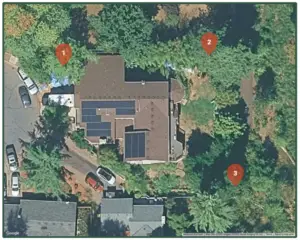
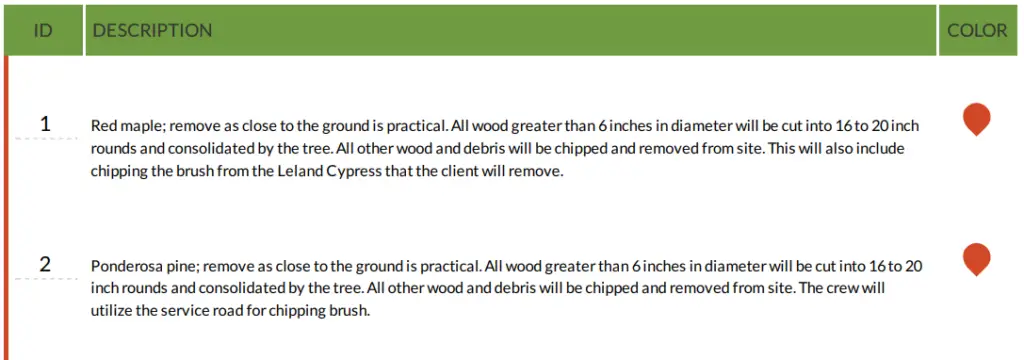
A written quote with clear scope. What exactly is being removed or pruned. What equipment will be used. What the cleanup includes. What the permit situation is and who handles it.
Honest advice — not upsells. A good arborist will tell you if a tree doesn’t need to come down, if it can be saved with cabling or treatment, or if the work can wait a season. They’re not incentivized to recommend the most expensive option.
No pressure. Reputable companies give you time to think, compare quotes, and ask questions. The estimate is free. The decision is yours.
A Note on Price — Why the Lowest Bid Usually Costs More
Tree work is one of those industries where the cheapest option rarely turns out to be the best value.
Here’s why:
Reputable companies carry expensive insurance policies, maintain professional equipment, employ trained climbers, and dispose of debris properly. All of that costs money — and it shows up in the quote.
Companies with very low bids are often cutting costs somewhere: no workers’ comp, unlicensed labor, outdated equipment, or a plan to leave the cleanup to you. The difference between a $600 quote and a $1,000 quote for the same job is almost always explained by one of these factors.
That said, fair pricing matters. We always provide transparent, written estimates at Grove Tree Care — and we’ll explain every line item if you ask. For a detailed look at what tree removal typically costs across the south metro, read our 2026 tree removal cost guide for the Portland metro area.
Grove Tree Care — How We Measure Up
We wrote this guide because we believe informed homeowners make better decisions — and because the standards in this guide are ones we hold ourselves to every day.
Here’s where Grove Tree Care stands on every point:
- Oregon LCB License #100543 — verified on the LCB website
- Full general liability insurance — available on request before any work
- Workers' compensation coverage — protects you and our crew
- ISA-certified arborists on staff and on-site
- South metro permit experts — West Linn, Tualatin, Wilsonville, Oregon City, and more
- We never top trees
- Written estimates on every job — no pressure, no surprises
- Senior and military discounts available
- No-cost financing options for larger projects
- Based in Aurora, OR — locally owned, no franchise overhead
We also give back: on every job we donate a tree planting in the Oregon National Forest on your behalf, because sustainable tree care means more than what happens in your yard.
How to Choose a Tree Service Company Portland South Metro?
If you’re evaluating tree companies in the Portland south metro, we’d love the opportunity to earn your business — and we’re happy to answer any of the questions in this guide directly.
Call or text us at (503) 208-4071, or fill out our online estimate request. We serve West Linn, Tualatin, Wilsonville, Oregon City, Lake Oswego, Sherwood, Canby, Aurora, and the surrounding communities. Estimates are always free, and we’ll never pressure you into a decision.
Written by the team at Grove Tree Care — ISA-certified arborists serving the Portland south metro from our Aurora, OR shop. Questions? Call or text (503) 208-4071 anytime.